Frequently Asked Questions
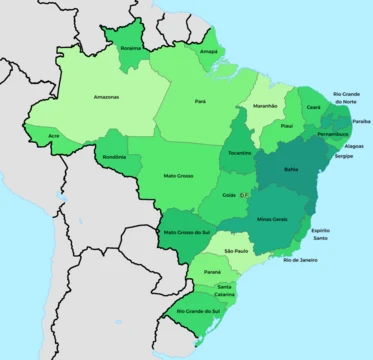
The most-asked questions about brazilian states.
What is this encyclopedia about?
It is an unofficial, fan-written reference covering all 26 Brazilian states and the Federal District, organized for readers who want a quick, accessible guide to each state's identity, history, and culture.
How many states does Brazil have?
Brazil is divided into 26 states plus one Federal District (Brasília), which serves as the national capital and is administered separately from the states.
What are the five macro-regions?
The states are grouped into North, Northeast, Central-West, Southeast, and South regions, each with distinct geography, climate, and cultural traditions.
Where should a newcomer start reading?
Begin with the regional overview pages to get a feel for geography and culture, then pick a single state entry—São Paulo or Bahia are popular first reads due to their size and historical weight.
Which state is the most populous?
São Paulo, home to roughly 45 million people, is both the most populous and the most economically dominant state in the country.
Which state is the largest by area?
Amazonas, in the North region, covers about 1.57 million square kilometers, making it roughly the size of France.
What's the difference between a state and the Federal District?
Each state elects its own governor and bicameral legislature, while the Federal District is a single administrative unit that houses the national government and has no separate state-level legislature.
What are some landmark historical moments tied to specific states?
Brazil's independence was proclaimed in Salvador, Bahia, in 1822, and the abolition of slavery was signed in São Paulo that same year—two states that anchor the national founding narrative.
Who are the key figures readers should know?
There are no fictional characters; the main figures are real historical and political personalities—governors, independence-era leaders, and cultural icons—each tied to the state they represent.
Is this site affiliated with the Brazilian government?
No, it is entirely a fan-made, unofficial project written by enthusiasts; any errors or omissions are the authors' own and do not reflect official government publications.